

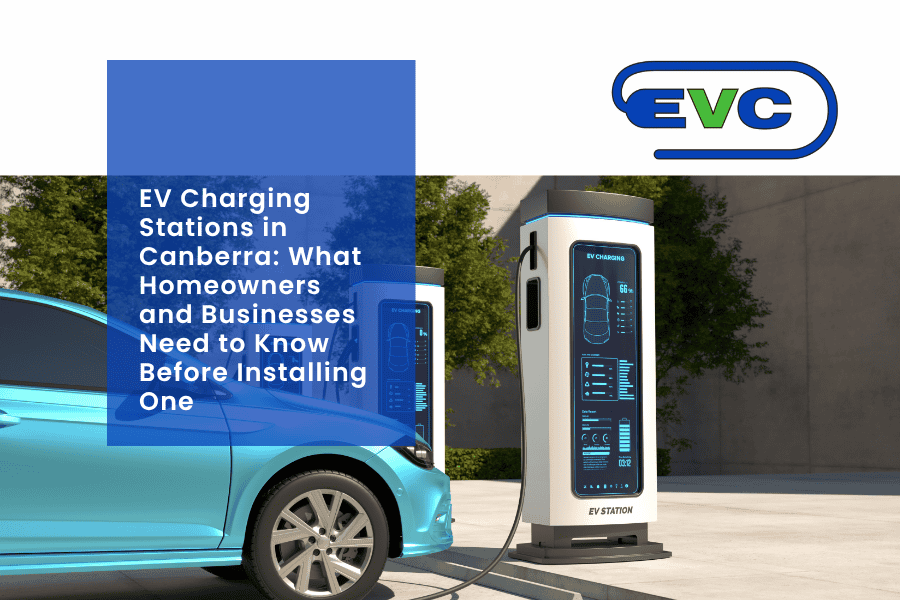
The transport landscape across the ACT is changing fast, with more Canberra drivers switching to electric vehicles every day. Whether for a home or a commercial property, setting up a reliable, fast, and safe way to power these cars is the next major step.
Installing a dedicated charging point is not as simple as plugging in a standard household appliance. It requires a solid understanding of your property’s current power capacity, local ACT safety rules, and your long-term goals before booking a professional EV charging station installation in Canberra service.
This comprehensive guide breaks down everything Canberra homeowners and businesses need to consider before investing in an electric vehicle charging point ACT wide.
Understanding EV Charging Infrastructure Levels
Before you book an installation, it’s worth getting a feel for the different “levels” of charging hardware you can run in Australia. That way you don’t end up with something that only sort of fits, like it’s close but not really. You can match the setup to your everyday driving routines, or if it’s for a business, to your operational workflow needs.
Level 1: Standard Domestic Charging
This option uses the portable lead that comes with your vehicle, then you plug it straight into a normal household power point, typically 10A or 15A. It’s easy, but it’s also painfully slow. In many cases it can take about 15 to 30 hours to get an electric vehicle from empty to full. It’s generally the better pick for emergency top-ups, or drivers who rack up very low daily kilometers.
Level 2: Dedicated AC Wall Chargers
This is the gold standard for modern homes and smaller businesses. It is a fixed wall box installed on its own dedicated circuit, putting out between 7 kW (single-phase) and 22 kW (three-phase). It tops up a car battery in about 6 to 9 hours, making it perfect for overnight garages or workplace parking bays during the day.
Level 3: DC Fast Charging
These systems, which commonly run from around 50 kW up to over 350 kW, are commercial style chargers. They skip the vehicle’s onboard converter and send direct current straight into the battery, which is why they’re built for shorter sessions rather than overnight waiting. Capable of adding hundreds of kilometers of range in under 30 minutes, Level 3 systems are highly specialized, requiring significant capital investment and heavy-duty grid connections.
Essential Considerations for Canberra Homeowners
For residential properties, a home EV charger Canberra wide can turn your garage or carport into a sort of private refueling spot. But to make it smooth, a handful of infrastructure checks need to happen first, otherwise you’re just guessing.
Assessing Your Home Electrical Supply
In most Canberra neighborhoods, most houses run on single-phase supply. A dedicated 7 kW wall charger typically draws around 32 amps. If you end up running ducted reverse-cycle heating or cooling at the same time as an induction cooktop, plus an electric clothes dryer, then yes, you could overload your main consumer mains switch.
A licensed electrician will assess your switchboard capacity first. In some instances, they might recommend dynamic load balancing, a smart technology that automatically adjusts the power sent to your vehicle based on the real-time energy consumption of your household.
Switchboard Upgrades and Safety Devices
To comply with Australian rules, your charger needs its own circuit breaker and a Type B RCD safety switch. This specialised safety switch protects your property from complex electrical faults unique to DC battery systems. If your current switchboard is outdated or lacks physical space, a minor upgrade will be necessary before work begins.
Exploring the Sustainable Household Scheme
The ACT Government helps ease the upfront costs of energy-efficient upgrades through the Sustainable Household Scheme. Under this initiative, eligible Canberra homeowners can access low-interest loans ranging from $2,000 to $15,000 to assist with an EV charger supply to install Canberra wide.
This financial support makes it much easier to spread the initial cost of your charging infrastructure over a manageable repayment period, letting your future-proof your home without the upfront financial strain.
Commercial EV Charging for Canberra Businesses
For local enterprise owners, developers, and strata managers, investing in commercial EV charging ACT wide is no longer just a premium perk; it is rapidly becoming an operational necessity.
Commercial EV Installation Checklist
- [ ] Site Feasibility Study – Check your building’s power capacity and switchboard space.
- [ ] Hardware Choice – Choose tethered (fixed cable) or untethered (socket only) chargers.
- [ ] Smart Software – Set up tracking and billing systems for staff or customers.
- [ ] Parking Compliance – Ensure layout meets Australian parking space standards.
- [ ] Accessibility – Create wide, clear bays for safe and equitable access.
Future-Proofing Assets and Compliance
Integrating fleet or public charging infrastructure into a commercial lot or tight basement parking structure requires strict spatial assessment. Under Australian Standards (AS 2890.1), charging pedestals and cable management solutions must not encroach on the minimum parking bay dimensions.
Furthermore, accessibility guidelines dictate that modern commercial developments must allocate fully accessible parking spaces equipped with clear signage and wide shared zones to safely accommodate all users without creating trip hazards.
Smart Energy Management and Fleet Integration
For businesses running a fleet of delivery vans or staff cars, plugging in multiple vehicles at the same time can cause a massive spike in your commercial power bill due to peak demand charges. This is where smart network software comes in. OCPP software lets fleet managers monitor energy in real time, schedule cheap off-peak charging, and easily bill employees or customers.
Why Professional Installation Matters
It cannot be understated: any dedicated EV charging installation must be handled from start to finish by a qualified electrical contractor. Attempting a DIY installation or hiring an unlicensed tradesperson is illegal, compromises your manufacturer’s vehicle warranty, and invalidates your building insurance policy.
A professional technician will manage the entire lifecycle of your project:
- Conducting a precise calculation of your property’s maximum electrical demand.
- Selecting the appropriate heavy-duty cabling to withstand continuous high-current loads without overheating.
- Mounting hardware securely to protect it from extreme weather or physical vehicle impact.
- Issuing a formal Certificate of Electrical Safety (CES) upon completion, confirming total compliance with all territory regulatory frameworks.
Frequently Asked Questions
What is the typical cost for an EV charging station installation in Canberra?
A standard home Level 2 EV charger supply install Canberra setup generally costs between $1,500 and $3,000, including the wall box and standard labour. If your property needs a long cable to run, switchboard upgrades, or three-phase power, the price will scale upward.
Can I install a fast three-phase charger at my residential home?
Yes, provided your home is connected to a three-phase electrical supply. While a standard single-phase setup caps your charging output at 7 kW, a three-phase connection allows you to install an advanced 22 kW charger. This effectively cuts your charging time down significantly, though it does require your vehicle’s internal charger to support that high AC intake rate.
How long does it take for an electrical team to complete the installation process?
For a straightforward residential property where the main switchboard is positioned close to the designated parking spot, installation is usually completed within 2 to 4 hours. Commercial installations or residential properties requiring extensive trenching, conduit routing through multi-level walls, or main service panel upgrades can span across one or more full working days.
Do business properties require explicit council permission to install public chargers?
It depends entirely on the scale of the system and your current property zoning. Minor interior wall-mounted retrofits within an existing private commercial garage rarely require formal planning approvals. However, setting up external Level 3 rapid charging hubs involving heavy excavation, public pavement alterations, or major structural works will necessitate a formal application through the ACT Planning authorities.
What is the practical difference between a tethered and an untethered charging unit?
A tethered unit features a permanently attached, built-in cable, allowing you to pull up and plug straight into your vehicle without hassle. An untethered unit features a universal open socket instead. This requires users to provide their own separate cable, making untethered units highly versatile for commercial public car parks because they accommodate different international vehicle connector types.
Will installing a dedicated charger drastically increase my quarterly power bill?
Your overall power usage will increase based on how frequently you drive and charge. While power bills rise, electricity is much cheaper than petrol, cutting your overall transport costs. You can save even more by charging during off-peak hours or using solar power during the day.
Ready to Power Your Journey?
Getting your EV setup right from day one saves you a massive amount of time, cash, and stress down the road. It really comes down to choosing the right hardware for your daily driving and making sure your property actually has the electrical backbone to handle the extra load. Taking the time to sort those details out now means you avoid overloaded switchboards and enjoy a safe, hassle-free charge every single time you plug in.
With Canberra moving quickly toward an electric transport future, setting up your home or business asset now is just a smart, future-proof move. Partnering with a team of local specialists means you do not have to guess your way through the technical stuff; you get total peace of mind knowing the entire installation ticks every single box for ACT electrical regulations and safety standards.
Contact the expert team at Electric Vehicles Canberra today to arrange your obligation-free site assessment and future-proof property.
